Safe Electric Ireland Explained: Registered Electricians, Certs and What You Can Do Yourself
We get asked a lot at the counter what a homeowner can wire up themselves, and what needs a registered electrician and a cert. The answer is set out in law, and it is run day to day by Safe Electric on behalf of the Commission for Regulation of Utilities (CRU). This guide pulls the main points together from the official sources.
This is a general overview, correct as of October 2026. It is not legal advice. Safe Electric (safeelectric.ie) and the CRU (cru.ie) are the authoritative sources, and the rules can change.
Who runs Safe Electric
Safe Electric is the statutory regulatory scheme for electrical contractors in Ireland. It is operated by Safe Energy Ireland on behalf of the CRU.
- Safe Energy Ireland, part of SGS Ireland, has been the Safety Supervisory Body appointed by the CRU since January 2023.
- RECI held that role from 2016 to 2022. If you see older material saying RECI runs the scheme, it is out of date.
- Safe Electric keeps the register of Registered Electrical Contractors (RECs), inspects their work on an ongoing basis and takes disciplinary action where needed.
- The CRU handles enforcement, including prosecutions against unregistered electrical contractors, and reviews appeals about how Safe Electric handled a complaint.
Restricted Electrical Works: what the law says
Section 9E of the Electricity Regulation Act 1999 says a person shall not carry out designated electrical works unless they are a registered electrical contractor. The works are set out in the Electricity Regulation Act 1999 (Restricted Electrical Works) Regulations 2013 (S.I. No. 264 of 2013), which came into force on 1 October 2013.
In a domestic property, Restricted Electrical Works are:
- installing, commissioning, inspecting or testing a new fixed electrical installation that needs connection or reconnection to the network
- modifying, installing or replacing a distribution board (consumer unit or fuse board), including the customer tails on either side of the main protective device
- modifying, installing or replacing an electrical installation in any of the special locations listed in Part 7 of the National Rules for Electrical Installations
- installing or replacing one or more circuits, including adding protective devices for them on the distribution board
- inspecting, testing, certifying or reporting on an existing installation
“Domestic property” covers a house, flat or maisonette. That includes a home office or surgery of up to 50m² forming part of it, outbuildings and grounds (curtilage) used for non-commercial purposes, and the home’s connection to the network. It also covers caravans and motor caravans used for living in on a non-commercial basis.
The penalties are set in the Act:
- on summary conviction, a fine of up to €5,000, up to 6 months in prison, or both
- on conviction on indictment, a fine of up to €15,000, up to 3 years in prison, or both
What a homeowner can legally do
The 2013 Regulations exclude “minor electrical works” from the restricted list. They say minor works include:
- replacing an electrical accessory such as a light switch
- replacing or relocating a light fitting where the existing circuit is retained
- adding a socket to an existing radial circuit (the Regulations’ example names radial circuits only, so if your sockets are on a ring circuit, check with an REC)
- electrical works that do not need a completion certificate under section 9D of the Act
The law makes no exception for owner-occupiers. New circuits, changing or replacing the fuse board and any new supply are Restricted Electrical Works in your own home too, and need an REC. Any work you do yourself should still meet the National Rules for Electrical Installations.
The restriction applies to domestic property. The Regulations exclude commercial premises, construction sites, agricultural and horticultural installations, exhibitions, public lighting and potentially explosive atmospheres. Safe Electric calls most commercial and industrial work “Controlled Electrical Works”. The CRU recommends using an REC for these, but it is not a legal requirement that only RECs carry them out. Other safety law, such as workplace health and safety rules, still applies to that work.
Completion certificates
The law makes it mandatory for an REC to issue a completion certificate for all electrical works, excluding minor works. If an REC does minor works, they must certify them if the customer asks.
Safe Electric lists these main types:
- Certificate No. 1: connecting a new installation under 50kVA to the network. An electronic version is available.
- Certificate No. 2: the same for 50kVA and above. An electronic version is available.
- Certificate No. 3: alterations, additions and extensions to an existing installation. It cannot be used to get a connection or reconnection from the network operator.
- Agricultural work: a Supplementary Agricultural Certification Form, signed by the contractor, goes with the completion certificate. The Department of Agriculture needs both before it finally certifies farm building grant aid.
What the homeowner should get:
- Ask for the certificate as soon as the work is finished.
- The REC gives you the original white copy. A copy also goes to Safe Electric.
- The REC must confirm the post-connection tests on the certificate. Otherwise it is not complete.
- Only the REC’s named Qualified Certifier can sign it.
- If the REC spots a hazard that cannot be put right at the time, they issue a Notice of Potential Hazard with the certificate.
ESB Networks will not start connection work until a validated completion certificate, where applicable, has been sent to it by the contractor’s regulatory body. Typical cases ESB Networks lists include a new house, an extension, altering internal wiring, reconnecting a premises that has been disconnected for more than six months, and connecting electric fences. Keep your copy.
Periodic inspection reports
Safe Electric recommends that installations are inspected and tested periodically, as appropriate to their use and environment. A Periodic Inspection Report (PIR) is a report, not a completion certificate. It records the condition of the installation, good or bad.
The REC must give you the PIR with the completed Test Record Sheet and explain the next steps to bring the installation up to standard. Inspecting and reporting on an existing domestic installation is itself Restricted Electrical Works, so a PIR on a home must come from an REC.
Checking an electrician is registered
Use the Find a Contractor search on safeelectric.ie. You can search by area, by keyword (such as a town or business name), or both.
Not every REC appears online, as enrolment on the public website is not required. If a contractor is not listed, call Safe Energy Ireland on 091-480974 to check whether they are currently registered.
Complaints and reporting unsafe work
- Work by a registered contractor: use the Safe Electric complaint form if the work does not meet the technical and safety standard, or if the REC will not issue a completion certificate.
- Work by someone who is not registered, or someone claiming to be an REC when they are not: use the “Report Illegal Electrical Works” form on safeelectric.ie.
- Faults, damaged lines or outages: call ESB Networks on 1800 372 999.
How a complaint is handled:
- Safe Electric acknowledges complaints within 1 working day.
- If a site inspection is needed, Safe Electric aims to do it within 7 working days of acknowledging the complaint.
- The REC and the complainant (or a representative of each) are required to attend.
- If breaches are found, the REC must fix them at no extra cost to the customer, unless the breach came from the job specification.
- You get a summary report of the findings.
Safe Electric does not deal with commercial disputes such as price, or with things like how well a lighting scheme performs. It also does not take complaints about work that isn’t finished, or where another contractor has since worked on the installation, so don’t have the work altered before you complain.
Solar PV, EV chargers and heat pumps
These installs follow the same rules as any other domestic job. If the job involves a new circuit, a new protective device on the board, a change to the distribution board or a new installation needing connection to the network, it is Restricted Electrical Works. It must be done and certified by an REC.
If you are applying for a grant, check the scheme’s current terms for the paperwork it needs.
FAQ
Can I do my own electrical work in Ireland? In practice, only minor works, such as swapping a light switch. New circuits, fuse board changes and new supplies are restricted and need a Registered Electrical Contractor, even in your own home.
How do I check if an electrician is registered? Search safeelectric.ie. If they are not listed, phone 091-480974.
Do I need a completion certificate for a new fuse board? Yes. Replacing a distribution board is Restricted Electrical Works, so it needs an REC and a completion certificate.
Will ESB Networks connect my house without a cert? Not where a certificate applies. ESB Networks needs a validated completion certificate from the contractor’s regulatory body before connection work begins. That includes reconnecting a premises that has been off for more than six months.
What can I do if my electrician won’t give me a cert? Make a complaint using the complaint form on safeelectric.ie. Refusing to issue a completion certificate is one of the listed grounds.
Is RECI still in charge of registering electricians? No. RECI ran the scheme from 2016 to 2022. Since January 2023 it has been run by Safe Energy Ireland on behalf of the CRU.
more
Trade insight

SEAI Grant Changes October 2026: Solar PV, the New €600 Battery Grant and Heat Pumps
What changed in SEAI grants from 6 October 2026: solar PV for homes built before 2025, the new €600 battery grant, €2,000 boiler scrappage with heat pumps and 45% for business solar PV. Correct as of 6 October 2026.
Read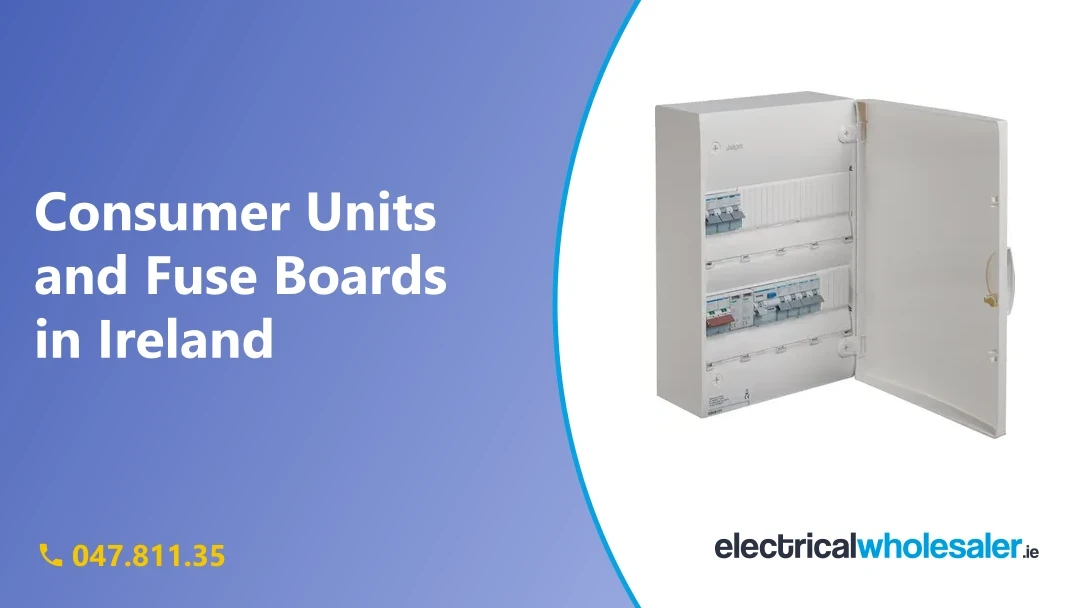
Consumer Units and Fuse Boards in Ireland: Choosing a Board, Including Garages and Outbuildings
Fuse board, consumer unit or distribution board: how to size one, what IP30, IP40 and IP65 mean, where surge protection comes in, and what Irish rules say about boards in garages and outbuildings.
Read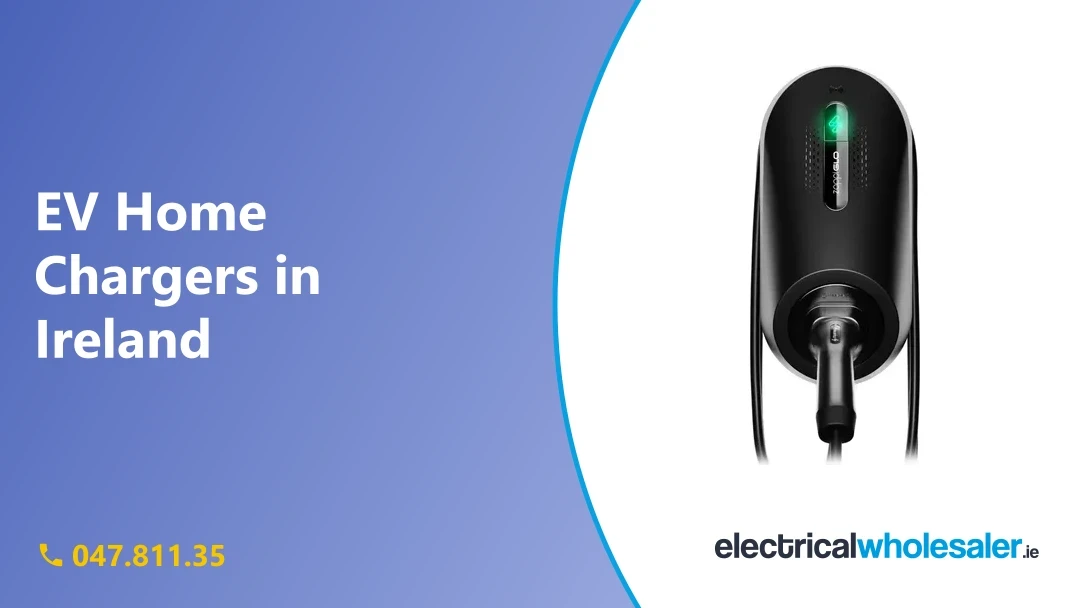
EV Home Chargers in Ireland: SEAI Grant, Choosing a Charger and Installation
How the €300 SEAI home charger grant works, how to choose between 7kW and 22kW or tethered and socketed, and what a compliant Irish installation involves. Correct as of October 2026.
Read